Nigeria is one of the most exciting fintech markets in the world, and one of the most demanding. Customers expect instant transfers, regulators expect proper controls, and fraudsters test every gap. Here is how to plan a fintech app that survives contact with all three.
This is general guidance from our experience building payment products, not legal advice. Speak to a lawyer about your specific model.
1. Decide your licensing route
Holding or moving customer money in Nigeria is regulated by the Central Bank of Nigeria. Most startups choose one of two routes:
- Get your own licence for your category, such as a payment service or switching licence. This gives you control but takes capital, time and a compliance team.
- Partner with a licensed institution, such as a bank, microfinance bank or payment service provider that offers accounts and payments through an API. This is how many apps launch faster.
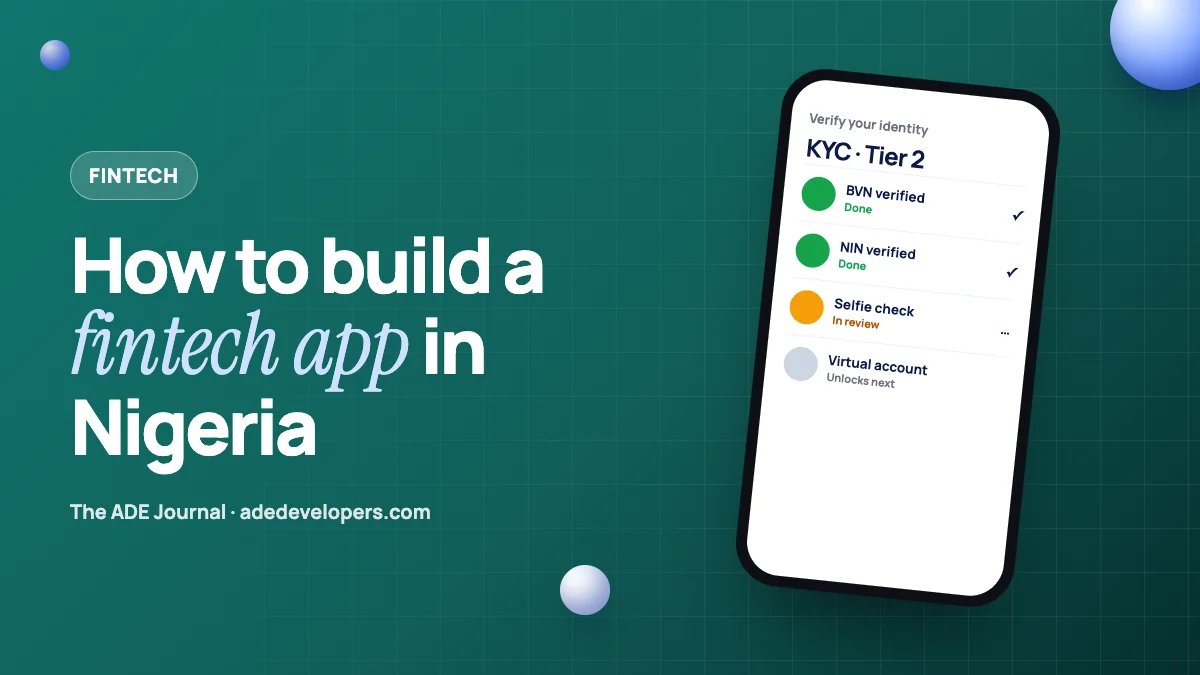
2. Build KYC in from day one
Nigerian fintech apps typically use tiered KYC: customers start with basic limits and unlock more as they verify their BVN, NIN, a selfie or liveness check, and sometimes their address. Design your screens so each step is short and explains what it unlocks.
3. Get funding and payouts right
- Virtual accounts so each customer can fund by bank transfer and see the balance update automatically.
- Webhooks and reconciliation so every naira in matches every naira recorded, even when a notification arrives twice or late.
- Payouts to bank accounts with name checks before sending.
4. Treat security as a feature
- Transaction PINs, biometrics and device binding.
- Limits and velocity rules that flag unusual activity.
- Encrypted data, audit logs and least-privilege access for staff.
- Compliance with the Nigeria Data Protection Act for personal data.
5. Launch small, then scale
Start with one core use case, such as bills and transfers, launch to a small group, watch the numbers closely, then add cards, savings or credit once the basics are rock solid.
Build it with a team that runs fintech
We build and operate fintech products like mySubWallet and BetaData, with virtual accounts, cards and KYC flows in production. See our fintech development service or talk to us about your idea.